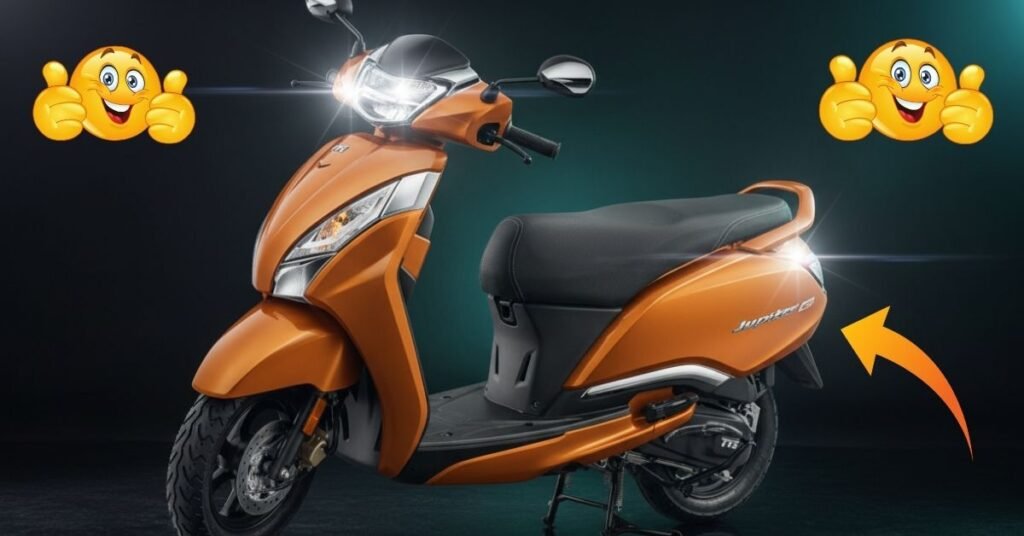
TVS Jupiter Electric Scooter: If you’re exploring two-wheelers for urban commuting and are curious about electric options, the “TVS Jupiter Electric Scooter” is a name worth noting. While the petrol-version of the TVS Motor Company Jupiter is already familiar on Indian streets, the electric variant brings new possibilities — combining the trusted Jupiter lineage with the promise of cleaner, quieter and more efficient mobility. In this article I’ll walk you through what has been revealed so far about this model, how it might perform in everyday use, and why it could matter in 2025 and beyond.
The Jupiter Brand Evolves to Electric
TVS Jupiter Electric Scooter: The TVS Jupiter Electric Scooter has long been hailed for its ease of use, practicality, and strong resale/after-sales ecosystem. The shift towards an electric version reflects the broader EV movement in India’s two-wheeler landscape — with rising interest, incentives, and urban infrastructure pushing more riders to consider electric options. What this means for the Jupiter Electric is that it doesn’t have to reinvent the wheel — it can leverage a familiar platform, trusted brand and servicing network, while delivering the benefits of zero-emission riding, lower running cost and future-proof mobility.
What We Know So Far: Expectations & Early Insights
While TVS Jupiter Electric Scooter has not publicly released full technical specs for the Jupiter Electric yet, credible leaks and industry commentary point to some likely features. The expected range is placed in the ballpark of 100 km to 120 km on a full charge. Given the class and positioning (likely aimed at urban commuters), that range is realistic and sufficient for most day-to-day city usage.

Additional expected highlights include a digital/TFT display with Bluetooth connectivity and navigation support, ride modes and possibly a reverse-mode for parking convenience.From a design standpoint the Jupiter Electric is expected to borrow styling cues from the petrol Jupiter platform, thus giving familiarity while adapting to electric architecture (battery pack, electric motor, possibly revised floorboard or under-seat space).
Read more : Hero Splendor 97.2 cc
Design & Usability: City-Smart Commuter Focus
One of the appealing traits of the Jupiter (petrol model) is its user-friendly ergonomics: comfortable seating posture, easy manoeuvring in traffic, decent storage and trustworthy performance. The electric variant is likely to retain much of that usability — for example, the low seat height, simple user interface and accessible controls — which is important in city conditions like those in your area (Kolar, Madhya Pradesh). Charging logistics will matter though: whether the battery is removable for home charging, how long charging takes, and what the real-world range is under Indian traffic patterns will make a big difference.
Ride Experience, Running Cost & Real-World Considerations
In everyday use, the benefits of an electric scooter like the TVS Jupiter Electric Scooter would include silent operation, instant torque (making stop-start traffic easier), fewer moving parts (potentially lower maintenance) and no petrol cost at the moment of ride. However, as with all EVs, trade-offs exist: the upfront price may be higher than the petrol variant, charging infrastructure (especially in smaller towns) may be less convenient, and range may drop in real-world conditions (traffic, rider weight, temperature).

Given the projected range of 100-120 km, a commuter who covers maybe 30-40 km per day would likely manage fine — you could ride a full day and charge overnight. For longer rides or regions with fewer charging options, you’ll want to check local dealer support and battery-swap/charging options.
Why It Matters & Who Should Consider It
The TVS Jupiter Electric Scooter holds appeal for anyone who primarily uses two-wheelers for city commuting — office runs, errands, college rides, short local journeys — and who wants to shift away from petrol to electric without losing the familiarity of a trusted brand. If you live in a place like Kolar and have access to a home charge (or a nearby charging point), this scooter might offer real value: lower running cost, less dependence on petrol stations, and a more future-aligned ride.
On the flip side, if your usage pattern involves long rides, highways, or you’re in a location with limited charging, then you’ll want to weigh petrol alternatives as well — but for most urban/sub-urban riders the electric Jupiter looks like a strong option.

Final Thoughts
To sum up, the TVS Jupiter Electric Scooter offers an intriguing proposition: it carries the legacy of the Jupiter name into the electric era, taps into growing EV trends and aims to deliver a practical, city-ready commuter ride. While full specification details and pricing are still awaited, what is available today suggests it could be a smart move for many riders. As always, before purchasing, check local availability, test ride experience, real-world range, charging options and after-sales support. If all looks good, this could well be the electric scooter that many Indian commuters adopt without major compromise.