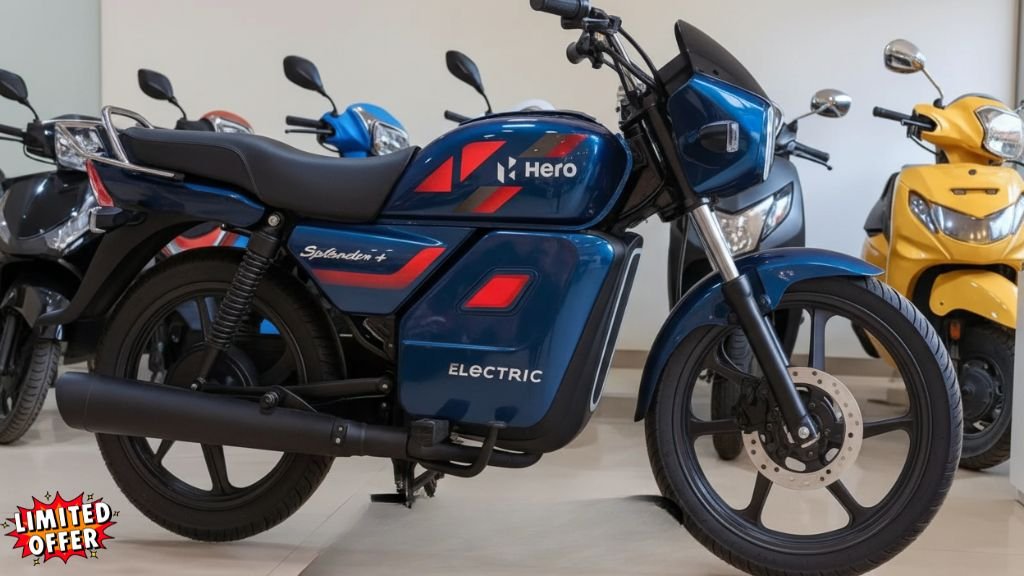
Hero Electric Bike New Model: The Indian two-wheeler market is racing into a new era, and the spotlight is firmly on the Hero Electric Bike lineup. While the narrative of “affordable, reliable, and easy to ride” stays intact, the 2025 shift adds smarter batteries, quicker charging, and refined ride quality—without losing the everyday practicality that riders love. In this ultimate buyer’s guide, we decode range, charging, performance, maintenance, and real-world ownership so you can decide whether going electric in 2025 finally makes sense for your life and your wallet.
Along the way, we keep a laser focus on how a modern commuter should feel on India’s roads: calm, predictable, and quietly capable—exactly the vibe that the phrase Hero Electric Bike 2025 Launched evokes for everyday riders.
Understanding The 2025 Advantage
India’s cities are growing faster than ever, and so are fuel bills. That’s where the Hero Electric Bike 2025 Launched conversation becomes practical, not just aspirational. With per-kilometer running costs measured in paise, electric rides make daily commutes dramatically cheaper than petrol bikes. Add near-silent operation, fewer moving parts, and cleaner air in crowded neighborhoods, and you’ll see why the shift feels inevitable. The 2025 generation also answers older doubts: better water sealing for monsoons, smarter battery management to protect cell life in heat, and more service touchpoints. It’s no longer a tech experiment; it’s a road-ready solution that begins paying you back from day one.
Design
Hero Electric Bike New Model: A good commuter looks familiar at a glance but reveals thoughtful details up close. The latest Hero Electric Bike 2025 Launched design follows that mantra: slim LED headlamps for crisp visibility, integrated DRLs for daytime conspicuity, and a clean side profile that tucks wiring away from dust and rain. Panel lines are tight, paint has depth, and touch points—switchgear, levers, side-stand—feel robust, not toy-like. Under the skin, the frame geometry aims for neutral steering and confidence on broken tarmac. There’s space under the seat for daily essentials, and racks or grab-rails are shaped for bungee cords and soft bags. It’s simple, practical, and built for the traffic patterns we actually ride.
Battery & Range
Spec sheets shout big range numbers, but the truth is daily conditions matter—speed, payload, gradients, and stop-go traffic. With the Hero Electric Bike 2025 Launched platform, expect practical urban range tuned around typical 25–55 km/h city speeds. Smart battery management monitors temperature and discharge rates so range remains consistent over time. Most commuters need 20–40 km per day, which the mid-capacity packs cover easily with a single overnight charge. Planning a longer Saturday run? Eco mode softens throttle maps to squeeze extra kilometers without turning you into a “slow vehicle.” The sweet spot is predictable, repeatable range in the real world—not just in lab cycles.
Charging Experience
Charging is where adoption becomes habit. The Hero Electric Bike 2025 Launched ecosystem leans into safe, apartment-friendly options: a standard 5A home socket for overnight top-ups and compatible faster chargers at select points for quick recovery during your workday. Thermal safeguards, cell-level balancing, and auto cut-off extend pack health, while IP-rated ports keep monsoon worries at bay. For riders with portable battery variants, the lift-out design lets you bring the pack indoors to charge under a desk or near a wall socket. The idea is simple—remove friction, remove excuses. When charging is this mundane, you never think twice about staying topped up.

Performance & Ride Feel
In traffic, instant torque beats top-end horsepower. The Hero Electric Bike 2025 Launched setup delivers smooth, linear pull from standstill, letting you fill gaps and clear junctions without frantic downshifts. Regenerative braking adds a subtle drag when you roll off the throttle, reducing wear on brake pads and adding tiny sips of charge back to the pack. Tuned suspension—telescopic forks up front, adjustable shocks at the rear—keeps the ride composed over speed breakers and patchwork asphalt. Dual-channel braking (disc where equipped) provides reassuring stops, and grippy tyres with rain-friendly tread patterns cope well with dusty roads and sudden showers. The net effect is a ride that’s quiet, predictable, and pleasantly stress-free.
Ergonomics & Comfort
Commuters come in all sizes, so the rider triangle matters. The Hero Electric Bike 2025 Launched ergonomics favor upright posture, natural reach to the bars, and mid-set foot placement to minimize knee bend. The seat foam uses medium density to prevent “sofa sink” while still staying kind to your spine on longer rides. Pillion comfort gets proper attention—usable grab-rail, sensible foot-peg height, and seat length that doesn’t force awkward perches. If you wear a backpack, the gentle seat contour prevents slide-forward fatigue when braking. These small human-first touches are often the difference between a bike you tolerate and a bike you love.
Digital Dashboard & Connectivity
A commuter display should be readable at a glance. The Hero Electric Bike 2025 Launched console blends high-contrast speed readouts with real-time range, ride mode, and battery SOC in clear, legible fonts. Practical alerts—low charge, service reminders, side-stand down—arrive without fanfare. App connectivity adds value where it matters: turn-by-turn prompts sized for quick glances, trip history to track costs, and geofencing or anti-theft notifications for peace of mind. Firmware updates are designed to be painless—install from the app when parked, then ride away with smoother throttle maps or refined regen tuning. It’s smart tech that stays in the background, where it belongs.
Safety & Reliability
Safety is more than ABS. The Hero Electric Bike 2025 Launched chassis tuning aims for stability first—predictable steering at low speed, planted feel at 50–60 km/h, and progressive brake feel even on dusty surfaces. Electrical safety gets equal billing: robust insulation, short-circuit and over-current protection, and temperature monitoring across the pack. Waterproofing around connectors keeps monsoon gremlins at bay, while fail-safe limp modes bring you home gently if a sensor misreads. Tyres choose all-weather patterns over flashy compound claims because trust under rainclouds beats spec-sheet bragging any day.
Ownership Costs
Fuel savings are the headline, but the quieter story is maintenance. With the Hero Electric Bike 2025 Launched platform, there’s no engine oil, no clutch, fewer fluids, and fewer wear parts. Brake pads last longer thanks to regen, and scheduled services focus on inspection, firmware, bearings, and brake health. Electricity costs are stable compared to volatile petrol prices, and smart timers let you charge during off-peak hours where applicable. Over a three-year horizon, total cost of ownership shifts convincingly in favor of electric—especially for riders who clock 25–40 km daily.
Monsoon & Heat
India tests machines with heat, dust, and sideways rain. The Hero Electric Bike 2025 Launched electrical sealing, fender design, and splash management minimize water ingress on nasty days. Battery thermal controls aim to keep cells in the happy temperature band, protecting long-term health even in May afternoons. Rubber parts resist cracking, and fasteners receive corrosion-resistant coatings. The ergonomics also consider wet-road realities: lever texture for gloved grip, mirrors that stay steady over bumps, and a side-stand angle that holds firm on sloped parking patches. Season after season, the bike should feel consistently “sorted.”

Charging At Work & In Apartments
Adoption improves when charging fits your routine. For the Hero Electric Bike 2025 Launched, think small and consistent: top up at 30–80% to extend cell life, keep your charger off the floor during monsoons, and use a surge-protected outlet if your building allows. In apartments, coordinate with the society—clear labeling, scheduled charging windows, and a tidy cable run reduce friction with neighbors. At work, a simple corner outlet with a sign—“Charging 2–3 hours”—does wonders for courtesy. When the plan is boring, you’re doing it right.
Test Ride Checklist
Before buying, ride on roads you actually use. For the Hero Electric Bike 2025 Launched, check low-speed crawl in bumper-to-bumper traffic, throttle smoothness from zero, brake bite in the first 10 meters, and how the suspension reacts to your local speed breakers. Listen for quiet rattles over rough patches. Try U-turns—handlebar sweep and steering lock make or break tight lanes. Evaluate parking ease—weight while walking the bike, side-stand confidence, and back-up beeps if equipped. If your shoulders feel relaxed after 15 minutes in traffic, you’ve probably found your commuter.
Sustainability & Circular Care
An EV’s green story goes beyond tailpipe zero. The Hero Electric Bike 2025 Launched philosophy extends to battery second-life pathways and end-of-life recycling. Packs that fall below vehicle duty can power stationary applications, while recycling partners recover valuable materials when the pack finally retires. On your end, smart charging habits, correct tyre pressures, and routine brake inspections all raise efficiency and lower waste. Sustainability becomes a rhythm, not a slogan.
Customization & Accessories
Commuters benefit from little upgrades that change daily life. With the Hero Electric Bike 2025 Launched, consider a small flyscreen to soften chest-level wind on ring roads, a rear rack that accepts modular soft bags, and grippy floor mats (for step-through formats). A center stand simplifies tyre and brake checks at home. For visibility, add a high-mount reflective strip on the tail rack and reflective rim tapes—functional safety that looks clean. Keep wiring plug-and-play so future troubleshooting stays simple.
Who Should Buy It
If your daily ride is 15–40 km, you park at home with access to a socket, and you value low running costs over top-end thrills, the Hero Electric Bike 2025 Launched is an easy yes. New riders will appreciate the clutch-free calm; returning riders will love the fuss-free nature; delivery professionals will value predictable range and low downtime. If you routinely ride 150+ km in a single day, consider pairing the EV commuter with shared fast-charge access or keeping a highway-oriented second bike. The right tool for the job is still the smartest philosophy.
Buying Strategy
Great ownership starts at the showroom. For the Hero Electric Bike 2025 Launched, confirm warranty coverage on the battery and drivetrain, check service intervals, and ask about on-site pick-up options. Compare insurance quotes that reflect EV-specific parts. If your city offers incentives, get the paperwork checklist up front. Finally, ride two variants back-to-back (different battery or brake setups). Your wrists, not a brochure, decide what feels right.

Long-Term Outlook
Year one teaches routines: charging rhythm, tyre pressure habits, and seasonal range differences. By year two, the Hero Electric Bike 2025 Launched should feel settled—no squeaks, consistent braking, and predictable range. Keep firmware current, replace tyres on time, and clean charging ports monthly. Battery health isn’t magic; it’s discipline: avoid full drains, store above 20% SOC, and give the pack time to cool before charging after a very hot ride. Do this, and your EV stays cheerful for the long run.
Conclusion
Electric commuting in India is no longer a “someday” conversation. With the Hero Electric Bike 2025 Launched ecosystem, we finally get a commuter that is simple to own, easy to charge, pleasant to ride, and genuinely affordable to run. It doesn’t try to be a gadget on two wheels. It tries to be a faithful partner from Monday to Saturday, rain or shine, lane or flyover. If you’ve been waiting for a sign to switch, consider this your green light: the quiet, confident future has arrived—and it’s ready to ride home with you.
FAQs
Q1. How much range can I realistically expect in city traffic?
In mixed city use at typical 25–45 km/h speeds, you can expect predictable daily range aligned with your chosen battery pack. Riding smoothly and using Eco mode extends it further.
Q2. How long does a full charge take at home?
On a standard 5A socket, most commuter-class packs charge comfortably overnight. Faster chargers at select points can add a meaningful top-up during a coffee break.
Q3. Is the bike safe to ride in heavy rain?
Yes. The platform is designed with IP-rated connectors, sealed battery enclosures, and water-resistant switchgear suitable for Indian monsoons. Always ride cautiously on wet roads.
Q4. What routine maintenance does an electric bike need?
Checks focus on tyres, brakes, bearings, and firmware updates. There’s no engine oil or clutch to service, and regen reduces brake pad wear over time.

Q5. How does it compare to a petrol commuter on costs?
Electricity per km is significantly cheaper than petrol, and maintenance needs are lower. Over 2–3 years of daily commuting, total ownership cost typically favors the EV.