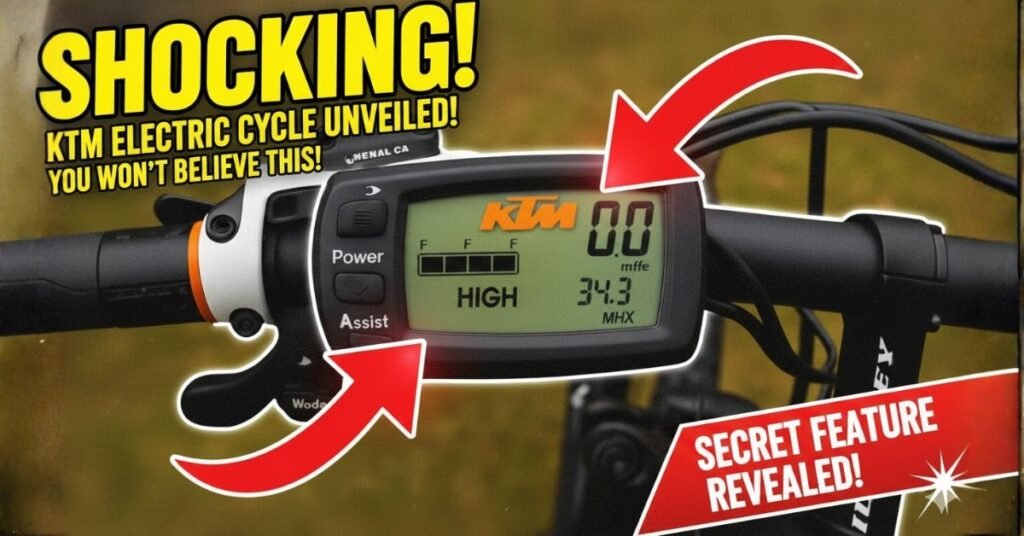
If you’ve been keeping an eye on the shifting landscape of Indian e-mobility, then the entry of KTM into the electric cycle segment marks a significant moment. With rising fuel costs, stricter emissions norms and increasing urban congestion, an electric cycle that promises freedom, practicality and modern styling could well be the game-changer many commuters have been waiting for. Let’s take a closer look at the “KTM Electric Cycle”, explore what is known so far, consider how it fits into today’s mobility picture and examine whether it really manages to deliver what it promises.
A new chapter for KTM in India’s electric arena
Although KTM is better known globally for its high-performance motorcycles and competition machines, it has in recent years signalled a desire to transition toward electric powertrains. On its international site, KTM cites “zero emissions, near-zero noise, instant motion” as the core of its “E-Ride” philosophy. KTM

In India, rumours and early reports suggest the company is preparing to launch an electric cycle at a very competitive price point. A recent item claims the KTM Electric Cycle 2025 will start at around ₹ 5,499 with a range of up to 320 km on a single charge. MY NEW SCIENCE SCHOOL+1 While such headline figures are enticing, they should be treated with caution until official specs, battery type, charging infrastructure and actual usability are confirmed.
What the early reports say: Specs, range and design
According to the early listings: the KTM Electric Cycle is expected to come with a long-range battery, fast-charging capability, and a sleek urban-friendly design. One site claims a 320 km range, while another mentions a 250 W motor and a 10.4 Ah battery for a simpler variant. MY NEW SCIENCE SCHOOL+1

The design language is also said to reflect KTM’s signature sharp lines and sporty aesthetics — which is interesting, because that suggests the model aims not just to serve as a utilitarian vehicle but also to offer a stylish “city ride” appeal. Meanwhile the fast charging and large range positioning are signs that KTM is trying to elevate the electric cycle segment beyond basic “short commute” needs.
Why the timing makes sense
From an Indian market perspective, this launch comes at a very opportune moment. Urban commuters are increasingly open to electric alternatives—two-wheelers are one of the easiest segments for electrification, given their lower cost, simpler technology and high usage frequency. With government incentives for electric mobility, rising petrol/diesel prices and increasing traffic jams, an electric cycle potentially offers a cost-efficient, low-maintenance transport solution.
Moreover, if KTM manages to deliver a substantial real-world range (say 200–300 km) at an accessible price point, the product could hit a sweet-spot between affordability and performance. The “sporty electric cycle” tag could attract younger riders who want something more exciting than a standard commuter e-bike.
What to watch before you decide
However, as with all new launches, especially in the EV/e-mobility domain, it pays to be cautious and check the details. Some of the key aspects to evaluate:

1. Real-world range versus claimed range. A claimed 320 km sounds fantastic, but battery capacity, city vs highway conditions, rider weight, terrain, and use of assist modes all affect actual range. Ask whether the figure refers to pedal-assist only, or fully electric ride.
2. Battery technology and charging infrastructure. What size battery has been used? How many charge cycles is it rated for? What is the charging time from 0–80%? Fast-charging claims are useful only if supported by infrastructure or an on‐board charger.
3. Service, parts availability and warranty. For a brand such as KTM, which is traditionally known for motorcycles, supporting an electric-cycle product means setting up service networks, supplying spare parts (especially battery modules) and offering warranty support.
4. Price versus value. While early reports say ~₹ 5,499, this might refer to very basic variant or a short-range version. Confirm whether the high-range models cost more, and whether additional features (display, connectivity, branded parts) justify any premium.

5. Fit for purpose. If you daily commute in stop-and-go city traffic, an electric cycle with moderate range and assist modes could make great sense. But if your usage involves long freeway stretches, heavy luggage or hilly terrain, then you need to check whether the product specs reflect that usage.
How the KTM Electric Cycle compares with the competition
Currently, India’s electric cycle market features a wide range of offerings—from basic commuter e-bikes with 30–50 km range to premium “e-mountain bikes” and electric motorcycles. The KTM move appears to position itself somewhere between these segments: cleaner and lighter than a full electric motorcycle, but more ambitious in range and performance than the typical commuter e-bike.
If the claims hold true, the KTM product could out-gun many urban e-cycles that offer 60–100 km range, by providing three to five times that range. That gives a marketing edge: “ride longer, charge less,” which may appeal to users seeking freedom from frequent recharge stops. At the same time, the KTM brand and sporty design could allow it to command a slight premium, provided the build quality and feature list support it.
Final thoughts: Is it worth waiting for?
If you are in the market for an electric cycle and willing to wait, the KTM Electric Cycle looks like a promising candidate. Its blend of brand value, range claims and urban styling could make it a smart buy—especially if the price remains accessible and if KTM backs it with reliable service and parts support.

However, if you need a vehicle immediately, it may be wise to compare the existing e-bike/e-cycle offerings, check their range, real ownership experience and service coverage, and then decide whether it’s worth waiting for the KTM launch. The key will ultimately lie in real-world performance, after-sales support and value for money rather than headline numbers alone.
In fact, what this launch underlines is a broader shift: the transformation of the two-wheeler market in India is accelerating. Brands once focused purely on petrol-engined machines are now dipping into electric alternatives, which means that consumers stand to benefit not only from more choice but also from increased competition, better specs and innovations. The KTM Electric Cycle is therefore more than just another product — it is a symbol of how mobility is changing on Indian roads.