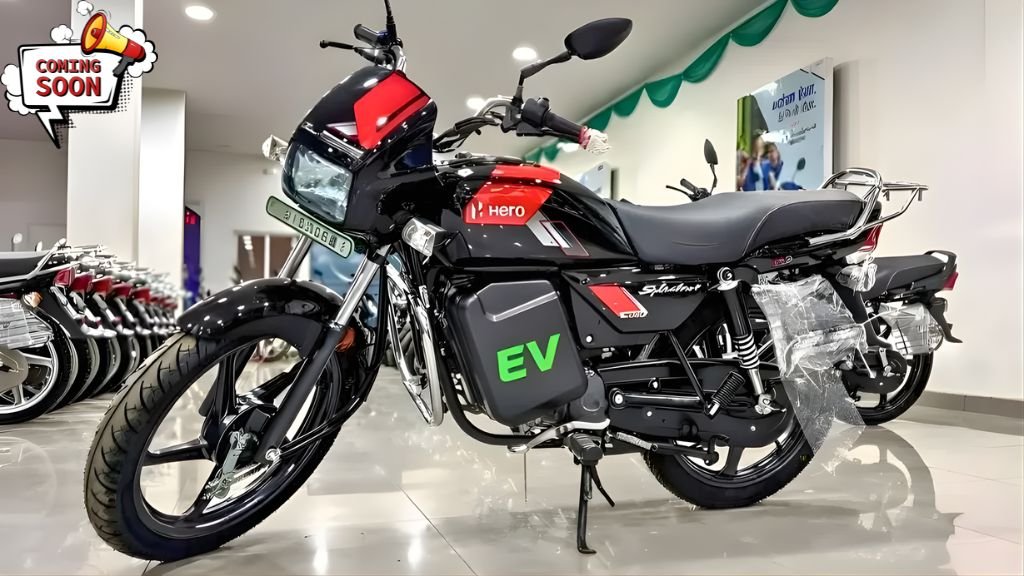
Hero Splendor Electric Premium Bike Launch: When you think of everyday commuting in India, one name stands out: the legendary Hero Splendor. For decades it has represented affordable reliability and practicality on two wheels. Now, as the road ahead turns electric, the brand is gearing up to shift that legacy into the future with the Hero Splendor Electric.
In fact, this model is poised to bring the trusted “Splendor” DNA into the EV era—while offering a clean, modern commute for urban and semi-urban riders alike. Here’s everything you need to know about the Hero Splendor Electric—its design cues, powertrain, tech highlights, market timing, and what it means for you if you’re looking to move into an electric motorcycle.
What the Splendor Electric Means in the Current EV Shift
This shift is significant because it shows that electric mobility isn’t just about premium scooters or niche bikes—it’s now about everyday commuting machines with broad appeal. With the Splendor Electric, Hero aims to tap into that space by leveraging the popularity of the Splendor name, while covering the needs of the average Indian rider seeking low-running-cost, low-maintenance transport.

At the same time, the electric variant is likely to feature subtle updates: perhaps LED lighting, a revised digital instrument cluster, and an updated body panel layout that accommodates the battery pack without losing the commuter-friendly ergonomics. The idea is to make the transition to electric seamless for existing Splendor riders who will feel comfortable with the ride feel, yet benefit from the technological upgrade.
From a usability standpoint this matters. Many riders in cities and towns prefer bikes that are easy to ride, easy to maintain, and familiar. By offering a design that doesn’t alienate them, the Splendor Electric addresses the “first EV bike” challenge—making the switch easier and less intimidating.
Powertrain and Performance: What We Know So Far
What these numbers tell us is this: The Splendor Electric seems to be optimized for daily commuting rather than performance riding. That fits the brand’s heritage. The real-world benefit will come from the combination of decent range, low running cost (no petrol, fewer mechanical parts), and a trusted service networo.

Software, Features and Connectivity: Enough for the Modern Rider
From a user-experience standpoint, these features matter. They help the rider monitor battery status, optimise route planning, locate nearby charging or swapping stations, and keep maintenance costs low. While traditional petrol bikes rely on simple mechanical gauges, EVs open up new possibilities—and Hero appears to be working toward that.
In terms of market positioning, Hero seems to be targeting the large commuter-bike market—where volumes are high, price sensitivity is strong, and reliability matters. If the Splendor Electric hits that sweet spot of affordability + daily usability + brand trust, it could become a key EV model for mass adoption.
Prospective Strengths and Things to Watch
The Splendor Electric has multiple prospective strengths: Its legacy name and trusted brand, commuter-friendly ergonomics, potential for low running and maintenance cost, and real-world usability for urban and semi-urban riders. When compared with many electric scooters or niche bikes, a motorcycle form factor means greater utility for longer rides, carrying loads, or longer usage patterns.

However, there are things to watch. Firstly, range anxiety—whether the claimed range holds up in real-world conditions, especially in Indian traffic. Secondly, charging infrastructure and home charging convenience—if users don’t have convenient charging, value drops. Thirdly, service network and battery maintenance—EVs bring new service needs. Fourthly, competition—several other two-wheeler EVs are emerging, and Hero must ensure differentiation.
What It Means for You: Should You Consider It?
If you are a daily commuter in a city or small town, use your bike for office runs, errands or short out-station trips, then the Splendor Electric could make a lot of sense. With reduced running cost (no petrol), simpler mechanical upkeep, and a trusted brand behind it, it’s an attractive proposition for those looking to make the shift to electric without breaking the bank. Meanwhile, if you currently ride a petrol Splendor or a similar commuter bike, the transition will feel familiar—only smoother and cleaner.
However, if you frequently undertake long highway rides, need very high top speeds, or lack convenient access to charging, you might want to wait and compare variants, or evaluate whether an electric motorcycle today meets all your usage patterns.

Conclusion
The Hero Splendor Electric marks a significant moment in India’s two-wheeler story—one where an iconic daily commuter is being reinvented for the EV era. While many details are yet to be fully confirmed, what we do know points toward a compelling offering: trusted brand, commuter-optimized design, strong value proposition, and a ride experience tailored for today’s urban India. In fact, if Hero delivers on the promise, this could be the electric bike many riders switch to without compromising on familiarity or usability. As the launch draws closer and more specifications emerge, it will be interesting to see how the Splendor Electric fares in the competitive EV landscape—but certainly, this is one to watch.