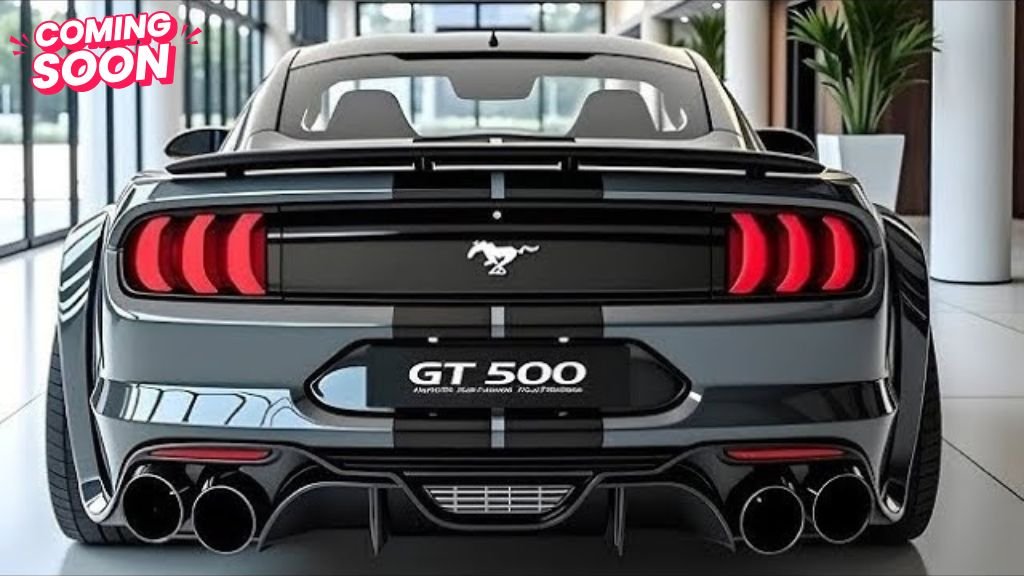
2026 Ford Mustang GT500: Few nameplates carry the thundering credibility of the Ford Mustang GT500. It isn’t simply a faster Mustang; it’s the halo that pushes the pony car into supercar territory. Over the years, the GT500 has blended raw, supercharged power with everyday drivability and track-hardened engineering. In this deep-dive, we unpack design philosophy, aerodynamics, chassis setup, engine tech, braking, tires, interior craftsmanship, infotainment, safety aids, ownership costs, maintenance strategies, tuning paths, and real-world buying advice—everything enthusiasts and first-time shoppers need to know. Throughout, we keep a practical lens on usability and value, so this guide is as helpful in a showroom as it is entertaining on a Saturday night read.
Design Philosophy
The Ford Mustang GT500 has always communicated intent at first glance. Wide fenders, a deep front splitter, an aggressive grille opening, and a low-slung stance tell you this is not a regular pony car. Yet the GT500’s lines aren’t just theatrics—they’re engineered. Air curtains around the front bumper help manage turbulence along the wheel faces, the vented hood extracts hot air and reduces front-end lift, and carefully tuned underbody panels smooth airflow beneath the car. The rear spoiler (or wing, depending on package) balances high-speed stability without nuking daily comfort. It’s a familiar muscle silhouette refined by CFD and wind-tunnel time: modern, muscular, and unmistakably Mustang.
Exterior Aerodynamics
2026 Ford Mustang GT500: Aerodynamic choices on the Ford Mustang GT500 reflect a street-first mission, track-second. That means meaningful cooling capacity for the radiator, intercooler, and brakes; effective lift reduction; and predictable high-speed manners. The front splitter increases front axle grip during turn-in, while side skirts maintain pressure balance along the rocker panels. Optional aero packages can add end plates and larger rear elements to increase stability under heavy braking zones. Crucially, the aero load arrives progressively, so the car still feels friendly at urban speeds and stable on highways. Think of the GT500 as a “long-weekend GT” that can stand tall on a lapping day rather than a single-purpose track tool.
Powertrain Character
The beating heart of any Ford Mustang GT500 is its supercharged V8 philosophy—big displacement, forced induction, and a soundtrack that can raise goosebumps. The calibration approach is as important as the hardware: a broad torque plateau that keeps the car elastic in everyday traffic and devastating when you go wide open. Supercharger sizing, charge cooling, throttle mapping, and ignition timing work together to deliver snap without jerkiness. Drive modes alter response: Comfort softens the power’s tip-in, Sport sharpens it, and Track maximizes aggression while coordinating with transmission logic and traction control. The result is thrust on demand and composure on command—exactly what you want from top-tier American muscle.
Transmission Tuning
The Ford Mustang GT500 shines when the gearbox thinks as fast as the engine revs. Dual-clutch logic (or an advanced automatic, depending on generation) is all about anticipatory downshifts and near-seamless upshifts. In Sport or Track, the transmission holds gears longer to keep the engine on the fat of the power curve, blips downshifts with authority, and minimizes torque interruption. In daily mode, it relaxes, short-shifting for quietness and economy. Steering-wheel paddles give you manual control for mountain roads, while the software protects hardware from money-shift mishaps. It’s a two-brain system: one for cruise serenity, one for apex hunting.
Chassis & Suspension
A great GT500 isn’t just a straight-line sprinter—it must turn, brake, and repeat. The chassis recipe blends a stiff structure with adaptive dampers, stouter bushings, and track-informed kinematics. Spring rates, anti-roll bars, and damper maps are tuned to maintain tire contact across bumpy pavement while resisting roll in quick transitions. The front end must bite on entry, the mid-corner balance should stay neutral with slight throttle adjustability, and the exit should put power down without sending the tail to the weeds. In short: grip, stability, and a sense of control that encourages you to push a little more each time.

Brakes & Heat Management
You don’t build a Ford Mustang GT500 without overbuilding the brakes. Big multi-piston calipers clamp high-mass rotors designed for repeated high-speed stops. Brake ducts, splash shields, and airflow management keep temperatures in check. Pad compounds in track packages prioritize bite and fade resistance; street compounds favor low noise and dust. Pedal feel matters as much as stopping distance—the best GT500 setups deliver a firm, linear pedal with a clearly defined bite point, so you can modulate right at the threshold without guesswork.
Tires & Grip
Tires translate engineering into asphalt truth. The Ford Mustang GT500 typically pairs staggered ultra-high-performance rubber with wheel designs that cool the brakes and reduce unsprung mass. Street-focused tires offer wet confidence and longevity; track-oriented options deliver peak dry grip at the expense of life and cold-weather friendliness. Whichever route you choose, tire pressure management is key. Slightly lower pressures can expand the contact patch and calm mid-corner skittishness—just remember to re-check after a spirited drive, as heat will raise PSI. The car’s stability control suite keeps a wide safety net but gives enthusiasts room to work.
Steering Feel & Drive Modes
The Ford Mustang GT500 uses variable-effort steering tuned to feel light at parking speeds and reassuring as velocity rises. The rack ratio balances precision with stability, so small inputs don’t produce big yaw moments. In Comfort, the wheel’s effort relaxes for commuting; in Sport/Track, effort increases and the on-center zone tightens for confidence on back roads. The ideal setup communicates tire load without chatter—enough feedback to let you sense grip limits, but filtered to avoid fatigue on long drives.
Interior Craftsmanship
Inside, the Ford Mustang GT500 blends performance cues with everyday usability. Deeply bolstered front buckets hold you securely without pinching, while available materials—leather, micro-suede, brushed metal, carbon accents—signal intent. A thick-rim steering wheel with tactile paddles, a short-throw shifter (where applicable), and clearly labeled drive mode controls remind you what the car is here to do. Storage is sensible, cupholders are damped, and road-trip ergonomics are considered. Ambient lighting sets the mood; the cabin’s sound insulation tempers drone while preserving the V8’s baritone when you ask for it.
Infotainment & UX
A performance cockpit must be usable at a glance. The Ford Mustang GT500 interface typically centers a clear touchscreen with configurable tiles, a crisp digital cluster, and quick-access toggles for exhaust, suspension, and steering. Wireless phone integration, a premium audio option, and over-the-air update capability round out the UX story. Track apps—lap timers, g meters, line visualization—add genuine value for practice days. The philosophy is simple: minimal menus when you’re driving hard, more depth when you’re parked and tinkering with settings.
Safety & Driver Assistance
Performance cars benefit from smart assistance when it stays out of the way. The Ford Mustang GT500 approach is to keep warning chimes and interventions subtle unless you’re genuinely about to step over a line. Blind-spot monitoring, rear cross-traffic alert, lane keeping, and adaptive cruise can de-stress commutes without intruding on spirited drives. A robust structure, strategic crumple zones, and advanced airbags complete the passive safety story. Crucially, calibration matters: the best systems know the difference between committed driving and actual danger.

Daily Drivability
Can you daily a Ford Mustang GT500? Absolutely—if you accept a few realities. Ride quality is firm but controlled, visibility is better than many exotics, and the powertrain is docile in traffic. Plan your fuel stops and be realistic about tire life. Use Comfort mode on rough pavement and Sport for clean, flowing roads. Most owners find the GT500 feels surprisingly friendly Monday through Friday, then switches personas for weekend thrills with a simple tap of a drive-mode button.
Ownership Costs
Budgeting for a Ford Mustang GT500 goes beyond the sticker price. You’ll want to plan for higher insurance, performance tires, premium fuel, and track-day consumables if you regularly hit a circuit. The upside is strong community support, a deep aftermarket, and good parts availability. Resale values tend to be robust for clean, well-kept examples, especially limited-production or well-optioned cars. Keep records, save receipts, and log your service history—future you (or the next owner) will thank you.
Maintenance Playbook
A high-output supercharged V8 loves fresh fluids and careful inspections. Oil changes on schedule, supercharger belt checks, brake fluid flushes, and differential service are the backbone of a healthy Ford Mustang GT500. Inspect tires for heat cycling and edge wear, especially after spirited canyon runs. Clean the radiators and heat exchangers to maintain cooling efficiency, and keep pads/rotors within spec. Seasonal detailing—including fabric guard for Alcantara and UV protection for exterior trim—keeps the car looking top-shelf.
Tuning & Upgrades
The GT500 responds well to thoughtful tweaks. A conservative ECU calibration can improve throttle linearity and widen the torque table; upgraded heat exchangers fight heat soak on hot track days; and brake pad/ fluid changes boost confidence without compromising street comfort. Stickier street-legal tires transform mechanical grip, while a mild alignment (a hint more negative camber) can sharpen front-end response. The golden rule: mod in systems, not ornaments—power, cooling, braking, grip, then aero.
Track-Day Etiquette & Setup
If you’re tracking a Ford Mustang GT500, start with a health check: fluids, pads, tires, and torque on critical fasteners. Dial in tire pressures cold and re-check after your session; bring them back down as heat builds. Use Track mode but let the car’s safety net help while you learn the balance. Build speed gradually and focus on consistency. In the paddock, open the hood to reduce heat soak and log notes about pressures, temps, and feel. Progress is in the data as much as the stopwatch.
Sound & Character
Numbers impress; character sells. The Ford Mustang GT500 is about the way the supercharger’s whine winds into the V8’s thunder, how the chassis squats and digs on corner exit, and the tactile way the wheel loads up as you lean into a sweeper. It’s muscle, yes, but it’s also manners. That blend—brawn and polish—is the recipe that keeps GT500 mythology alive from generation to generation.

Practical Buying Guide
If you’re shopping a Ford Mustang GT500, decide early how you’ll use it. Frequent track days? Consider the performance or carbon packages for cooling, aero, and brake upgrades. Mostly street? Choose comfort and tech options you’ll touch every day—premium audio, adaptive dampers, driver aids. Pre-owned shoppers should prioritize service history, accident-free reports, and evidence of warm-up discipline. A pre-purchase inspection by a Mustang-savvy shop is cheap insurance.
Competitor Cross-Shop
You’ll find rivals with similar 0–60 claims or top speeds, but the Ford Mustang GT500 separates itself with daily-friendly calibration wrapped in bombastic theater. It’s less fragile than some exotics, more visceral than many luxury coupes, and more charismatic than a spec-sheet might suggest. For enthusiasts who want American soul with contemporary sophistication, the GT500 checks boxes others don’t know how to draw.
Owner Community & Culture
Mustang culture is a built-in bonus. The Ford Mustang GT500 brings access to track days, forum wisdom, local meets, and tuning shops that speak the language fluently. That means troubleshooting is faster, parts are easier to source, and events feel like family reunions. Whether you’re comparing data logs or paint-correction tips, community shortens the learning curve and multiplies the fun.
Future Outlook
The GT500 formula evolves best in increments—more cooling here, smarter aero there, tighter calibration everywhere. Expect ongoing refinement in materials, thermal strategies, software, and user experience. The Ford Mustang GT500 thrives when it remains honest to its core: accessible thrills, durability, and a soundtrack you never forget.
Conclusion
The Ford Mustang GT500 is more than a fast Mustang; it’s the apex expression of an icon. It fuses supercharged drama with a chassis you can trust, real-world tech with a cabin you’ll actually enjoy, and a culture that welcomes you in. For drivers who crave unfiltered acceleration wrapped in everyday usability, the GT500 remains the perfect contradiction—civilized and savage, approachable and outrageous. It’s the rare modern machine that still makes your pulse quicken every time you catch its reflection in a storefront window.
FAQs
Q1. Can the Ford Mustang GT500 be a daily driver?
Yes. With adaptive damping, smart transmission mapping, and usable tech, it’s surprisingly livable. Expect firm ride and higher running costs, but everyday drivability remains intact.

Q2. What maintenance matters most on a GT500?
Regular oil changes, brake fluid refreshes, supercharger belt checks, and vigilant tire inspections—especially after spirited use. Keep heat exchangers clean for consistent performance.
Q3. Are track packages worth it for occasional lapping?
If you’ll track a few times a year, the enhanced cooling, aero, and brakes pay dividends. For pure street use, prioritize comfort and tech you’ll appreciate daily.
Q4. How does the GT500 compare to European rivals?
It delivers similar performance with a more muscular character, simpler maintenance pathways, and a more approachable ownership experience—without losing the sense of occasion.
Q5. What upgrades offer the best bang for the buck?
Pad/fluid upgrades for braking, improved heat exchange for consistency, and high-quality tires. A careful ECU calibration can also optimize response while keeping reliability front and center.